- Jackson Browne, “I Am a Patriot” (1989)
- George Michael, “Mothers Pride” (1990)
- Billy Ray Cyrus, “Some Gave All” (1992)
- Nirvana, “Smells Like Teen Spirit” (1991)
- Oingo Boingo, “War Again” (1994)
- Dropkick Murphys, “10 Years of Service” (1999)
- 2Pac, “Changes” (1992)
- Queen Latifah, “U.N.I.T.Y.” (1993)
- Alanis Morissette, “Hands Clean” (2002)
Jackson Browne, “I Am a Patriot” (1989)
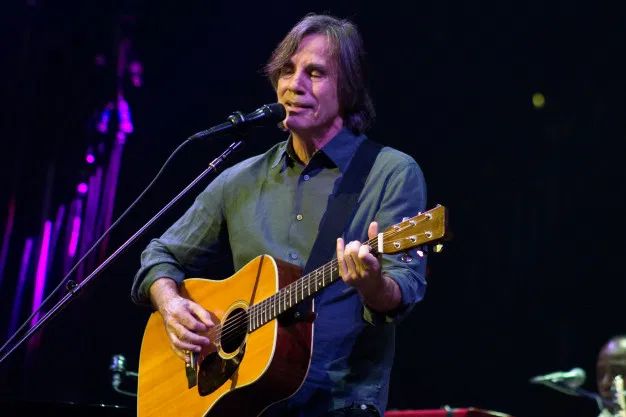
Another example of a civic hymn that is both patriotic and protest in nature was released on the 1989 album World in Motion; Jackson Browne’s cover of the Little Steven Van Zandt penned “I Am a Patriot” quickly became the closing song at all of Browne’s concerts. Often cited as the high point of that album, the song’s chorus argues that the singer is a patriot because he loves his country and family. In the song’s bridge, Browne exclaims that he is not a communist, capitalist, socialist, imperialist, democrat, or republican. Teachers can use it as a launching point to discuss Bill of Rights issues in the 21st century, and the differences between nationalism (mindless love of one’s nation) and patriotism (devotion to one’s country but willingness to point out its faults to improve them). The duality of the song’s list can also lend itself to a debate about the two-party system in the US.
George Michael, “Mothers Pride” (1990)

The brevity of the Gulf War certainly had an impact on the market for either protest songs or wave-the-flag patriotic ballads. The rise of grunge music in the aftermath of the Gulf War with its largely bleak, but frequently subdued political themes proved no fertile ground for civil hymns. George Michael, whose music was not typically known for patriotic themes, however, found his song “Mother’s Pride” from his first Listen Without Prejudice album in regular rotation during the Gulf War. The song focuses on a woman who loses her male partner to war, only to see her son grow up and wear the uniform. During the Gulf War, the song frequently played as background music during radio programs as people called in with their tributes to fallen soldiers. Perhaps as much a fortunate matter of timing, Michael’s song represents one of the few emblematic anthems of short-lived war; teachers can use the song to explore this brief moment in US history.
Billy Ray Cyrus, “Some Gave All” (1992)
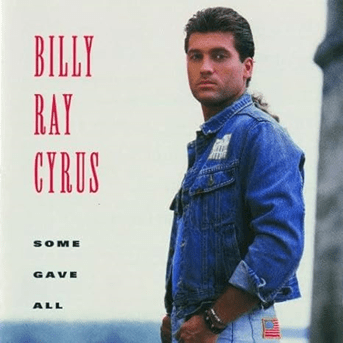
Billy Ray Cyrus’ 1992 hit “Some Gave All” does not address that conflict specifically, but, instead, is a general statement about how Americans owe their freedom to veterans, especially those who died in combat. The song’s music video is an American flag-drenched black-and-white recreation of battle scenes and soldiers returning home. Not surprisingly, Cyrus does not address any conflict surrounding war; like many wartime anthems, “Some Gave All” tells a rather simple tale about public recognition of the service and sacrifice of veterans. Cyrus’s song could lead to a rich classroom discussion about the need for simplistic and nationalistic messaging during a period of military conflict.
Nirvana, “Smells Like Teen Spirit” (1991)
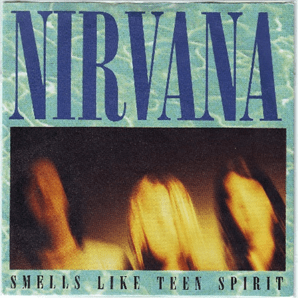
Nirvana’s 1991 “Smells Like Teen Spirit” is perhaps the decade’s most recognizable anthem for apathetic kids. Kurt Cobain’s performance evokes a sense of indifference, with barely recognizable lyrics and distorted guitar. The music video similarly speaks to dispirited youth, recreating a high school pep rarely in a darkly lit gym with cheerleaders wearing outfits featuring the anarchist symbol of the letter A in a circle. The lyrics similarly do not point to any particular social grievance in favor of a general listlessness, a motif that could be used to describe many in Generation X—the so-called “slacker” generation. Cobain’s song is one of the few on this list designed to evoke a sense of mood rather than any particular social critique. Students may want to consider why that seemingly nebulous aesthetic could be received differently by adults and young people.
Oingo Boingo, “War Again” (1994)
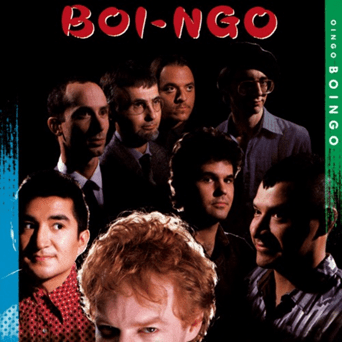
The Gulf War was short enough that Oingo Boingo’s “War Again” wasn’t even released until the war had long since ended; on the 1994 Boingo album, the song was a sort of last gasp for the band. The song itself is lyrically charged, making direct allusions to the sort of modern warfare the world saw in the Persian Gulf, as well as critiquing those aspects of modern American society that gave rise to it. Just as with “Eve of Destruction,” the song also provides numerous opportunities for the classroom teacher to use it as a primary text for some of the distinctive historical developments of the era, including high-tech weaponry, mass and electronic media, and the 24-hour news cycle. “War Again” is an excellent text for examining both the impact of grunge music on music and stands as one of the few examples of quality anti-Gulf War protest music.
Dropkick Murphys, “10 Years of Service” (1999)
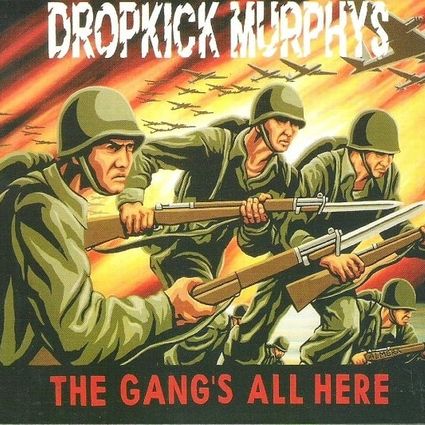
Long associated with working-class values such as being staunchly pro-union, Boston’s Irish punk rockers the Dropkick Murphys released “10 Years of Service” on their second album, 1999’s The Gang’s AllHere. Told from the point of view of a striking worker, while sonically angry lyrically the song clearly expresses the frustration of the blue-collar workers. The song’s protagonist tries to balance recognition that they were not seen as having value by their bosses with hopes to improve the lives of their families through hard work; these are offset by the acknowledgment that it is impossible to meet the middle-class standard of living of the time based on working-class salary. Teachers can use this song as an entrée to discuss 20th-century labor relations in the US, as well as debating concepts such as the validity of the American dream and whether the US is truly a meritocracy. More advanced students can explore concepts such as conspicuous consumption and relative cost of living across time.
2Pac, “Changes” (1992)
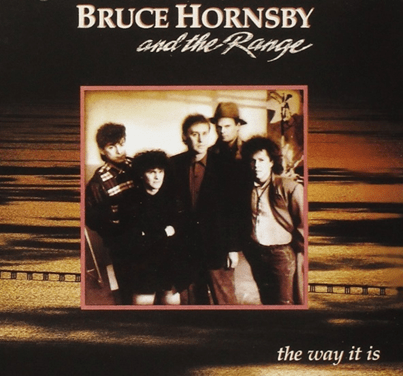
Characteristic of 1990s hip-hop, 2Pac’s “Changes” is a pastiche of musical elements, drawing musically from Bruce Hornsby’s “The Way It Is” (arguably a subtle protest anthem in and of itself) and lyrically from Ice Cube and Run DMC. 2Pac generally avoids judgment statements about the lives of impoverished blacks, instead chronicling the often morally complicated decisions that must be made to survive. Originally recorded in 1992, the song was only released after his early death in 1998. “Changes” challenges students to consider what counts as ownership of artistic material. Clearly, 2Pac borrowed liberally from other artists. Does he owe them anything in return?
Queen Latifah, “U.N.I.T.Y.” (1993)
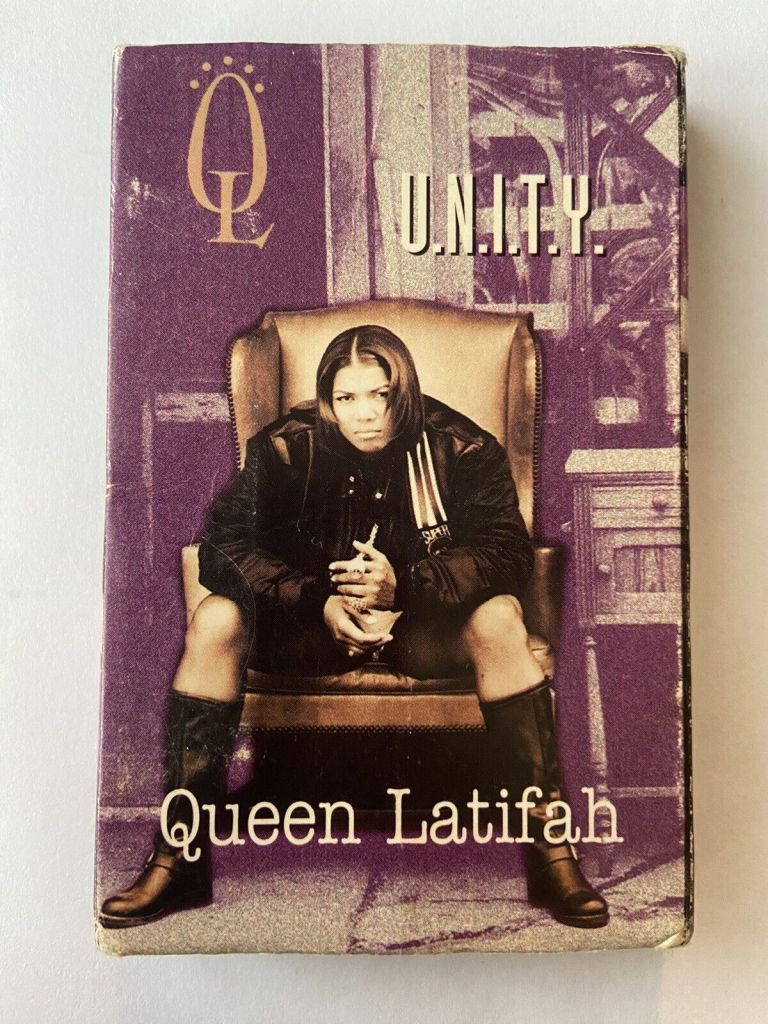
Unfortunately, one aspect of hip-hop culture that developed by the early 1990’s was that of an uber-masculine form that carried heavily misogynistic messages lyrically and visually, in the song’s videos. While some female emcees carved niches for themselves throughout the genre’s development, it was Queen Latifah who most soundly rejected these misogynistic notions in 1993’s “U.N.I.T.Y.” Latifah spoke out strongly against the harassment and violence committed against women. Despite the minor profanity in the lyrics, teachers would be well suited to use the song, particularly at this moment in history as men are becoming more and more frequently indicted for past misbehavior ranging from rape to harassment.
Alanis Morissette, “Hands Clean” (2002)
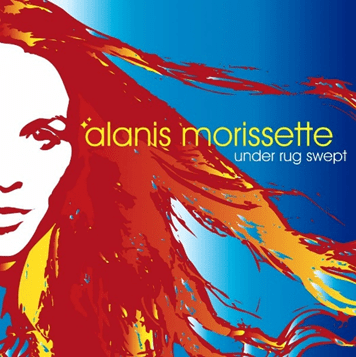
Recorded over the last couple of months of 2001, Alanis Morissette’s Under Rug Swept album was released in January 2002. The first single from the album was the confessional “Hands Clean.” Directly addressing Morissette’s statutory rape by an established record producer with a promise of career advancement, the track appeared during the intervening period between Bill Clinton’s impeachment for the Monica Lewinsky affair and the Harvey Weinstein revelations. The stark and open discussion of sexual abuse was a bold topic for a pop song and caused a re-evaluation of some of her other angst-ridden, envelope-pushing earlier work, like Jagged Little Pill’s “You Oughta Know.” The song itself is an important precursor that shows the slow development of the #MeToo women’s movement that rose to prominence in 2017.

