- Neil Diamond, “America” (1980)
- Steve Goodman, “City of New Orleans” (1971)
- Lee Greenwood, “God Bless the USA” (1984)
- Dead Kennedy, “California Uber Alles” (1979)
- Paul Simon, “Graceland” (1986)
- Public Enemy, “Fight the Power” (1989)
- Gloria Gaynor, “I Will Survive” (1978)
- Grandmaster Flash, “The Message” (1982)
- Stetsasonic, “A.F.R.I.C.A.” (1981)
Neil Diamond, “America” (1980)
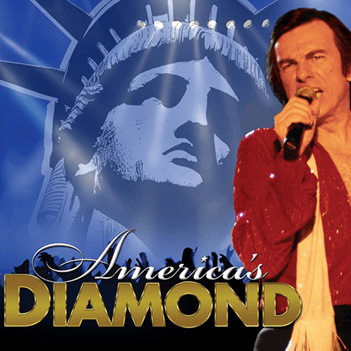
One of the penultimate civic hymns of the modern pop era, Neil Diamond released “America,” his ode to the contributions made by immigrants in the US, just four years after the US celebrated its centennial (1980). Clearly, this song can be used to discuss the changing demographic trends of various immigrant groups in the US and lead into a discussion on melting pot versus tossed salad metaphors for Americanization. Teachers are also well suited to use this song to discuss the perception versus the actual reception of different migrant groups in US history, for example, the “No Irish Need Apply” movement. It could also be used to analyze historical narratives; the idea that predominantly European immigrants came to this country through Ellis Island and migrated inward has validity, but it ignores other ports of entry on the East Coast, let alone mass movements such as Asian immigration on the West Coast.
Steve Goodman, “City of New Orleans” (1971)
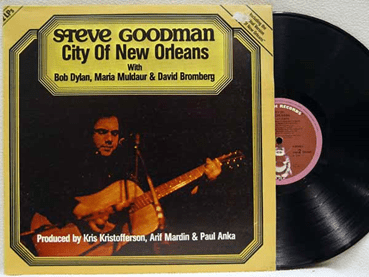
From immigration from without to movement within, “The City of New Orleans,” written in 1970 by Steve Goodman, ended up being popularized by Arlo Guthrie at the beginning of 1972. Named after the train that ran a route leading from Chicago to New Orleans, the song uses the experience of a railway trip as a way of depicting an image of the nation, both industrial and agrarian. It is a song heavily steeped in the ideology of the railroad (and the associated Manifest Destiny) and the Mississippi River. Willie Nelson’s decision to cover the song in 1984 was an artistically gutsy decision, given the status of Guthrie’s version, but in the “Morning in America” Reagan 1980s, the song found a new resonance, becoming a #1 hit for the singer and winning him a Grammy for Country Song of the Year.
Lee Greenwood, “God Bless the USA” (1984)
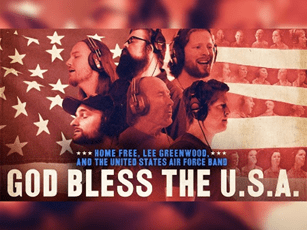
Lee Greenwood’s patriotic ode “God Bless the USA” has had a sort of phoenix-like existence. First recorded in 1984, the song was featured prominently in that year’s Republican National Convention before resurfacing during both the Gulf Wars and the September 11th attacks. Greenwood originally wrote the song in response to the downing of Korean Airlines flight 007. Despite that tragic inspiration, the song focuses more on appreciation, as the unnamed man recounts the sacrifices military personnel have made to let him know “I’m free.” Teachers may want to consider what in the song’s message provides it this sort of timelessness.
Dead Kennedy, “California Uber Alles” (1979)
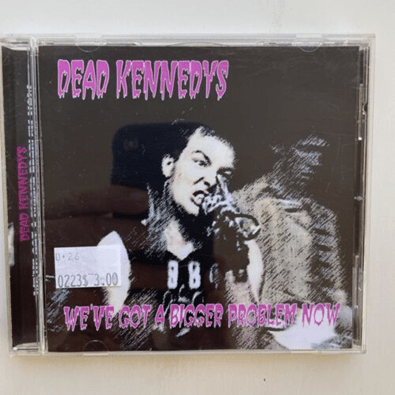
Lee Greenwood would likely react with disgust to one of the most anti-everything protest anthems of the era. The name of the band alone gives history teachers an opening for discussing serious political issues; Jello Biafra and the Dead Kennedys use pregnant signifiers to repudiate the ineffectiveness of the non-violent youth protests of the 1960s to sustain their political momentum, and they present a view of America as a place in need of massive political reorganization in the interests of creating a just society. This was certainly true of their seminal 1979 track “California Uber Alles,” which lampooned then-California governor Jerry Brown and his perceived hypocritical 1960s counter-cultural ethos by equating his tactics with those of the Third Reich. Certainly, there is an opportunity for the history teacher to capitalize on the song for a discussion of West Coast politics in the 1970s that would give rise to Ronald Reagan’s presidency. Once Reagan was elected in 1980, however, the Dead Kennedys re-recorded the song as “We’ve Got a Bigger Problem Now,” with lyrics updated to reflect the election results. There is ample material for the history teacher in this updated track to discuss American military involvement in foreign conflicts of the 1980s, globalism, the rise of the Religious Right, and even the political aftermath of the Nixon impeachment.
Paul Simon, “Graceland” (1986)

Sometimes, protest anthems are subtler lyrically and musically. Given the song’s title, Paul Simon’s “Graceland” (1986) at first may appear as an innocuous ode to an American institution. However, “Graceland,” both the song and the album, critiques the instrumentation on which popular musicians at that time relied. Simon’s protest is not explicitly wrapped in any sort of political discourse, at least explicitly, but instead, aesthetics. Simon broke new ground for its reliance on non-western and folk music, most famously through collaborating with the African choir Ladysmith Black Mambazo, which, itself, was a statement in this era of apartheid. Simon’s protest here is more subtle than perhaps other songs on this list, and, ideally, its inclusion challenges young people to consider the criteria for protest itself.
Public Enemy, “Fight the Power” (1989)
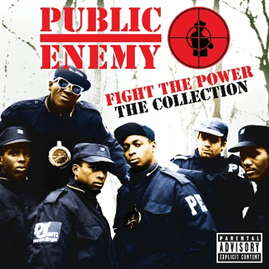
Intently more “in your face,” readers should remember that before Flavour Flav became a caricature on reality television, he was the hype man of one of the most incendiary groups of the 20th century: Public Enemy. 1989’s “Fight the Power,” used in Spike Lee’s film Do the Right Thing, was nothing less than a call to revolution. A marker in the emerging Afrocentric culture, the song expands on the 1960s concept of “Black Power” while also disparaging white, dominant culture. Whites who heard the song had to acknowledge the profoundly negative impacts of decades of discriminatory policies; in many cases, it was white America’s first real look into urban Black life. In a song whose every line bears exploration and scrutiny, teachers who can bear the profanity of the song can explore the complex and shifting attitudes about race in America.
Gloria Gaynor, “I Will Survive” (1978)
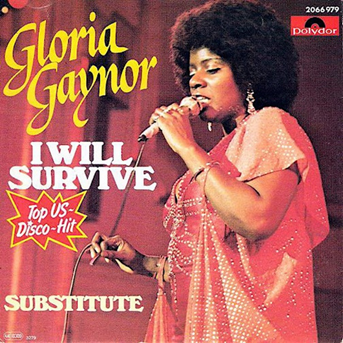
To many people, the prototypical view of music in the 1970s is disco; however, what most do not explore is how the origins of disco were tightly aligned with the LGBT movement in the US. Gloria Gaynor’s 1978 disco hit “I Will Survive” is both a women’s empowerment and a gay rights anthem. In particular, when the AIDS epidemic hit the US, the song became a battle cry for gay rights activists and members of the community. Teachers can use this song as a springboard into discussing the gay rights movement from its campus origins in the 1950s through the Stonewall Riot of 1969/the first gay pride parades in the early 1970s that emerged early in the decade, to the Reagan era rejection of the LGBT community as part of the greater culture wars of the 1980s’ that still exists in many circles today.
Grandmaster Flash, “The Message” (1982)

Like many rap songs that would follow it, Grandmaster Flash’s “The Message” (1982) was one of the first hip-hop songs that outlined the challenges of urban life in the late 20th century. Unlike many of its contemporaries, “The Message” eschewed upbeat boasting for a more incisive social commentary; it was also one of the first songs to bring greater aesthetic focus to emcees from background artists to more prominent figures. Teachers and students may want to use “The Message” and similar songs to consider why hip-hop emerged as a genre. For instance, what does the stripped-down instrumentation and use of samples say about the availability of musical resources in the inner city at the time?
Stetsasonic, “A.F.R.I.C.A.” (1981)
The 1980s saw a relatively large number of high-profile anti-South African apartheid songs; among these protest songs came Stetsasonic’s “A.F.R.I.C.A (Free South Africa).” Stetsasonic was an early hip-hop group formed in New York in 1981 and one of the progenitors of beatboxing. The group became a powerful voice for black consciousness. The lyrics of 1986’s “A.F.R.I.C.A” decrying war and conflict on the African continent and focusing on the injustices of South African apartheid come out of the group’s Afrocentric orientation. The song represents a curricular entree for students to learn about the apartheid system and the movements to overturn it, including efforts of early hip-hop artists to promote boycotts of South African products, including gold, oil, produce, and textiles.

